


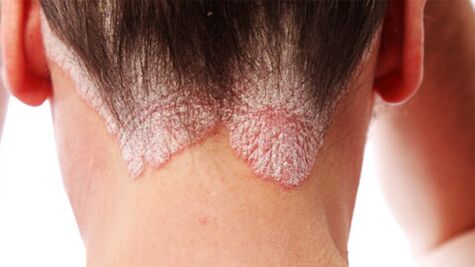
Psoriasis (lichen squamosus) is a chronic non-infectious autoimmune skin disease of unknown origin.Its most common manifestations are peeling of the skin (including the scalp) and the presence of rashes.Psoriasis can cause pathological changes in other organs: the most affected are the nails, spine, joints and kidneys.
The disease causes serious psychological discomfort in the patient;Due to the presence of defects in appearance, a person finds it difficult to adapt to the team and communicate with people.Severe forms of psoriasis can cause disability.It is impossible to completely cure pathology.However, proper treatment allows you to achieve stable remission and restore your previous quality of life.
What is psoriasis?
The main symptom of the disease is the presence of psoriatic plaques - scaly pink spots of different sizes that are accompanied by itching.Most often they are located on the scalp (they can also be present along the hairline, behind the ears), elbows, knees and can also appear on the genitals, buttocks, lower back and other parts of the body.Sometimes plaques appear over old scars.The pink color of the rash is due to the fact that the vessels in the affected areas dilate.
Psoriasis develops due to a malfunction of the immune system.In each layer of the epidermis (there are 5 in total: basal, spinous, granular, shiny and cornea) there are keratinocytes (about 90% of them in the entire epidermis).Depending on which layer they are in, keratinocytes perform different functions (regeneration, synthesis of keratin or other proteins, prevention of skin dehydration, protection of the lower layers of the skin).
Keratinocytes are constantly renewed.Its synthesis occurs in the basal layer.Then they move up, where each time they perform a new function.Upon reaching the stratum corneum, they lose their nucleus and become corneocytes (peculiar sacs that contain keratin).Now its function is as a barrier.Having survived their life, the corneocytes exfoliate from the surface of the skin.Keratinocytes live for 2 to 4 weeks and are then replaced by new ones.
In psoriasis, under the influence of a malfunctioning immune system, keratinocytes begin to divide much faster and their life expectancy is reduced.Peeling occurs, accompanied by inflammation of the epidermis and dermis.
Psoriasis can develop in people of any age (in total, approximately 4% of the world's population suffers from it).However, the disease occurs more frequently in people under 20 and over 55 years of age.Light-skinned people suffer from psoriasis quite often;among representatives of the Negroid race, pathology is detected much less frequently.
Causes of psoriasis
The exact causes of psoriasis have not yet been identified.However, the most common are 2 theories about the origin of this disease:
- Hereditary disease: The tendency to develop psoriasis is believed to be transmitted genetically.
- Consequence of immunological disorders caused by infections, bad lifestyle habits, climatic conditions and bad habits.
Reference!In 40% of patients who suffer from this pathology, family members also suffered from psoriasis.In addition, close relatives of patients often experience a latent form of psoriasis, which is manifested by changes in the structure of capillaries.
Most often, the "push" to start the development of psoriasis is emotional overload (in 50% of cases), focal infections, metabolic disorders, diabetes mellitus, liver diseases and the use of certain medications (most often glucocorticosteroids, beta-blockers, lithium salts).
There are other factors that “trigger” the disease or cause its exacerbation:
- Injuries, fractures.
- Freezing.
- Tanned.
- Smoking tobacco.
- Alcohol abuse.
- Obesity.
- Damage to the skin from chemicals.
- Food allergies.
- Parasitic infestations.
- Pregnancy and childbirth.
- Other skin diseases: eczema, dermatitis.
Reference!It is absolutely known that psoriasis is not contagious.The development of pathology in people whose close relatives suffer from this disease is explained by a genetic predisposition.Psoriasis is not transmitted from person to person.
Types and stages of psoriasis.
There are many forms of psoriasis, but some are the most common:
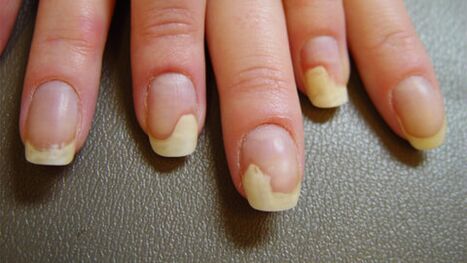
- common psoriasisdevelops more frequently.It is characterized by the presence of itchy plaques with a scaly surface on the skin.Also, with this form, discoloration of the nails and the appearance of small white spots on them are often observed.In some cases (in advanced stages), the nails move away from the nail bed.
- Guttate psoriasisIt manifests itself as a small rash, located mainly on the chest and back.The rash is accompanied by itching in areas where the skin is affected.Typically, the symptoms of the disease disappear after 4 to 6 months and no longer appear.However, the patient may later develop another form of psoriasis.This happens about half the time.Guttate psoriasis is usually seen in children and adolescents.It often develops as a result of an infection, most often after a bacterial throat infection.
- reversible psoriasisresponds well to treatment, sometimes it is possible to achieve stable remission without relapses.The red, weeping plaques appear only in some parts of the body, in the folds, and do not spread further.Typically, rashes appear in the groin area or under the mammary glands, also in the armpits.Reversible psoriasis develops more frequently in older patients.
- pustular psoriasisIt is a serious and dangerous form.In some cases it develops quickly and suddenly.It is characterized by the appearance of blisters with purulent contents on the soles of the feet and palms, then the affected skin thickens and begins to actively peel off.The rash subsequently spreads to large areas.In advanced cases, the skin of the entire body may be affected.Pustular psoriasis can threaten the patient's life.It mainly affects adults.
Psoriasis develops in 3 stages:
- Progressive.
- Stationary.
- Regressive.
progressive stageIt is characterized by the appearance of multiple nodular eruptions and their spread to new areas of the body.The plaques gradually increase in size.
In stationary stagethe appearance of rashes ceases.The existing plaques stop increasing in size, but active peeling begins on the entire affected surface.
In a phase of regressionThe plates become denser, their elements dissolve and peeling decreases.Then, at the site of the rash, spots without pigment remain.
Reference! Psoriasis can also be classified according to seasonality: there are summer and winter forms, depending on the development of exacerbations.Most often, relapses still occur more frequently in the autumn-winter period than in the spring-summer period.
Symptoms of psoriasis
The symptoms of psoriasis are:
- Pink rashes or white spots covered in scales.
- Itching in affected areas.
- Vascular changes.
- Signs of inflammation in the affected tissues.
- Deterioration of the appearance and condition of the nails.
Reference!About 1 in 10 patients develop arthritis as a result of psoriasis.Therefore, it is necessary to start treatment as soon as possible to prevent the development of complications.
Diagnosis
Psoriasis has a very characteristic clinical picture, so diagnosis is usually not difficult.If you scrape papules (plaques), 3 main phenomena are observed:
- Stearin spot: With light scraping, the peeling intensifies and the rash becomes similar to a drop of crushed stearin.
- Terminal film: If you remove the scales from the surface of the plate, you have a shiny and wet surface.
- Blood spray: If the terminal film is scratched, pinpoint drops of blood appear.
In some cases, a piece of dead skin is taken for analysis and differential diagnosis.
Psoriasis treatment
The main goal of medical measures is not to cure the patient (since this is impossible), but to achieve stable remission.A comprehensive treatment is carried out, the plan of which is developed in accordance with the course of the disease of a particular person.Includes:
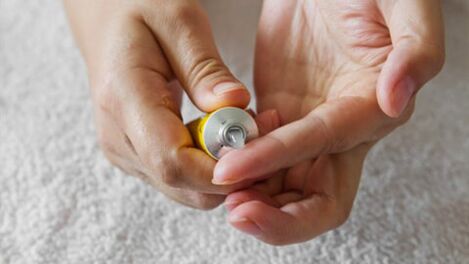
- Local drug therapy: ointments, creams, shampoos, sprays, lotions.
- General drug therapy: injections of antihistamines, sedatives, vitamins, treatment with immunosuppressants, cytostatics, retinoids, corticosteroid hormones.
- Maintenance therapy: the patient is prescribed ultraviolet irradiation along with a dermatotropic agent.
- The use of detoxification methods: the appointment of immunomodulators, procedures that cleanse the blood.
- In some cases, non-steroidal anti-inflammatory drugs are used.
If concomitant diseases are diagnosed, they are also treated.
Lifestyle with psoriasis
The patient must take into account that the treatment of the disease will last his entire life.In many ways, the duration of remission depends on it.It is important to give up bad habits (smoking, drinking alcohol).It is also necessary to follow a diet.Exclude citrus fruits, whole milk, chocolate, honey, eggs, foods containing red pigment (strawberries, watermelons) and other foods that can cause the development of allergic reactions from the diet.It is also advisable to avoid spicy, fatty, fried, smoked foods and broths rich in meat and fish.Condiments are excluded: ketchup, mayonnaise, mustard, etc.It is advisable to limit the intake of sugar and salt.You should pay attention to products that contain fiber, omega acids, vitamins A, E, C, group B, as well as zinc and calcium.
The following simple measures will help alleviate the condition:
- Refuse to stay in water for a long time: you should swim and bathe less often, it is recommended to take a short shower.
- Hard wipes should be replaced with a soft sponge or cotton cloth and regular soap with a product with a neutral pH.
- After a shower, you should not wipe yourself, but pat your skin with a towel;This will avoid damaging the plates and increasing itching.
- After water procedures, the skin should be moisturized with cream.
- It is necessary to give preference to loose, light clothing made of soft natural fabrics, since the pressure of clothing on the skin can provoke the development of new rashes.
- The itching often forces the patient to scratch, which can cause skin lesions;To prevent further damage, it is better to cut your nails.
- Drying out the skin should be avoided, so avoiding air conditioning will be beneficial, as will humidifying the indoor air.
- Although sunbathing can be beneficial for psoriasis, excessive exposure to ultraviolet light can aggravate the disease;You should consult your doctor about your sun exposure regimen.
- Any risk of skin irritation should be avoided.
- Cuts and wounds can cause new rashes to appear, so it is necessary to protect yourself from them.
- Stress is a common trigger for disease exacerbation, so it is necessary to avoid traumatic situations whenever possible.
- It is necessary to avoid physical inactivity (inactivity) - moderate physical activity will benefit the condition of the entire organism.
If you feel worse, you should immediately consult a doctor to prevent the disease from progressing to a more serious stage or complications from occurring.